

Line Art for Fashion: Sketching Clothing Designs Digitally
Line Art for Fashion: Sketching Clothing Designs Digitally
Fashion design has always been a marriage of imagination and expression. Traditionally, designers have relied on paper sketches to capture their vision, but today’s creative process is evolving rapidly. With the rise of digital tools, line art has become an essential method for sketching clothing designs. This modern approach combines the simplicity of outlines with the flexibility of technology, offering fashion designers new ways to experiment, refine, and communicate their ideas.

Hand drawn business woman drawing illustration
What Is Line Art in Fashion Design?
At its core, line art is the art of drawing with clean, simple lines — no shading, no gradients, and no excessive detailing. In the context of fashion, line art forms the foundation of digital clothing sketches, often referred to as fashion flats or technical drawings. These minimalist sketches clearly depict garment structures, allowing designers, manufacturers, and clients to understand the design without distractions.
Whether it’s the outline of a jacket, the curve of a dress hem, or the stitching details on denim, line art ensures accuracy and consistency. Unlike artistic illustrations that emphasize mood and style, fashion line art focuses on clarity, making it indispensable in both the creative and production stages.
Why Fashion Designers Are Embracing Digital Line Art
Moving from hand-drawn sketches to digital platforms offers numerous advantages:
-
Precision and Accuracy – Digital line art tools allow designers to create proportionally correct sketches. This helps avoid errors that can arise from freehand drawing.
-
Ease of Editing – Instead of starting over, designers can simply adjust lines, resize elements, or duplicate designs to create variations.
-
Layering Options – Digital platforms enable designers to separate elements like collars, sleeves, and accessories into layers, making experimentation more efficient.
-
Faster Workflow – With drawing tablets and software, the process of sketching, revising, and finalizing designs becomes much quicker.
-
Professional Presentation – Clean digital sketches look polished, making them ideal for portfolios, client presentations, or production handovers.
The shift to digital line art not only saves time but also allows designers to think more freely, knowing they can easily modify or refine their concepts.
Tools for Digital Fashion Sketching
The digital fashion sketching process often relies on powerful software and hardware. Some of the most popular tools include:
-
Adobe Illustrator – A leading choice for creating vector-based fashion flats and technical sketches.
-
CorelDRAW – Known for its flexibility in handling both illustrations and technical drawings.
-
Procreate – Ideal for quick, freehand sketches on the iPad, blending creativity with control.
-
CLO 3D and Marvelous Designer – Advanced software that takes 2D sketches and turns them into realistic 3D clothing simulations.
These tools allow designers to visualize not just the basic structure of clothing but also its movement, drape, and fit.
The Role of Line Art in Fashion Collections
Fashion design is rarely about a single garment; it’s about collections that tell a story. Line art plays a crucial role in building and presenting these collections. Designers use digital sketches to:
-
Communicate Ideas Clearly – Whether to clients, colleagues, or manufacturers, line art eliminates ambiguity.
-
Develop Technical Packs – Production teams rely on line drawings for measurements, construction details, and stitching guides.
-
Experiment with Variations – From changing sleeve lengths to swapping necklines, designers can test multiple versions quickly.
-
Save Resources – By perfecting designs digitally, unnecessary sampling and prototyping costs are reduced.
In essence, line art bridges the gap between imagination and reality. It provides a shared visual language that ensures everyone — from design teams to manufacturers — is aligned.
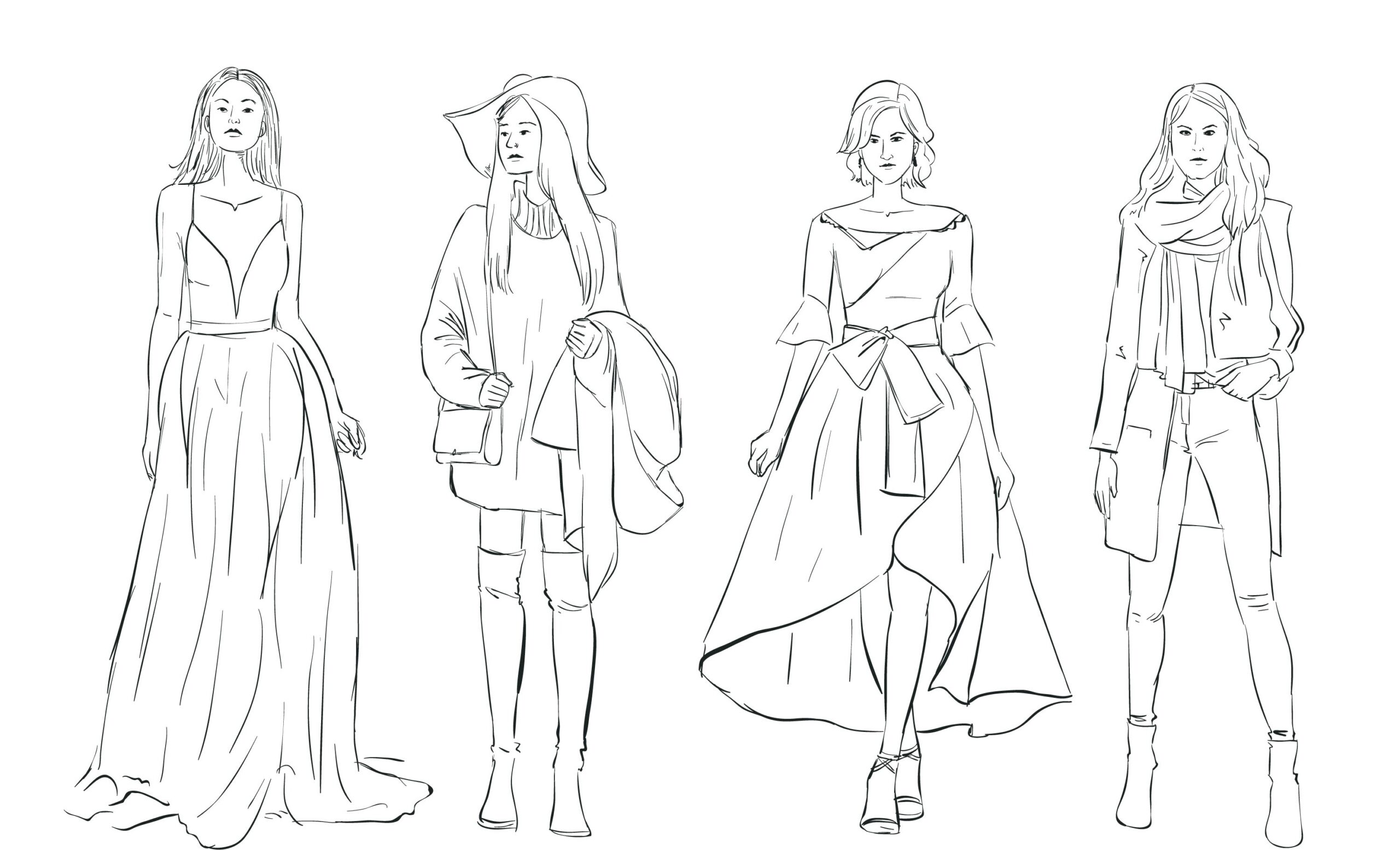
Fashion Line art collection with models
From Concept to Runway: The Power of Digital Line Art
The journey of fashion begins with a line. In the past, that line may have been drawn with pencil on paper, but today, it often starts on a digital tablet. Digital line art enables fashion professionals to capture their ideas with speed and precision while keeping creative freedom intact.
By embracing this method, designers can streamline workflows, communicate more effectively, and adapt quickly to trends. The result is a design process that is not only modern and efficient but also more aligned with the fast-paced nature of the fashion industry.